





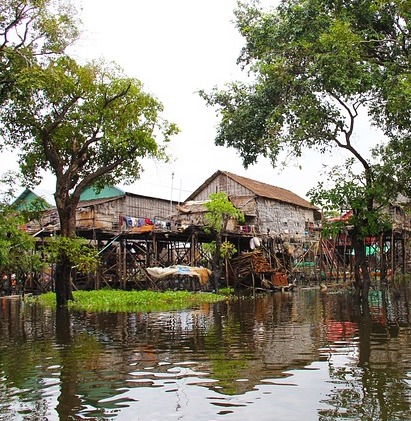



Climate adaptation requires funding – EIB steps up its support
The European Investment Bank Group EIB aims to provide twice as much funding for climate adaptation measures by 2030 as it has over the past five years. A total of €30 billion is set to help Europe better prepare for heatwaves, droughts, forest fires and floods. A further €11.8 billion is to be allocated to new projects in Europe and worldwide.
The €30 billion will be deployed as part of the Adaptation Plan Phase 2 (2026–2030). This, in turn, forms part of the EIB Group’s Climate Bank Roadmap Phase 2. The Boards of Directors of the EIB and the European Investment Fund (EIF) approved this plan on 19 October in Luxembourg. Furthermore, the meeting authorised additional funding of €11.8 billion, including €5.5 billion for Europe.
Nadia Calviño, President of the EIB Group: “There is no alternative to climate adaptation. Every euro invested in prevention and climate adaptation saves ten euros in reconstruction and repairs.”
What does Adaption Plan Phase 2 entail?
The plan combines financing, guarantees and advisory services to accelerate investment in climate-resilient infrastructure, cities and agriculture both within and outside the European Union.
The plan aims to accelerate adaptation financing by making it easier to identify and fund suitable investments, particularly for smaller businesses. Through the TechEU financing programme, the EIB Group is helping European companies bring advanced cooling systems, resilient energy solutions and water-saving technologies to market. TechEU is a platform that brings together institutional investors, equity fund managers, financial intermediaries and companies in need of capital.
Funding under the Adaptation Plan Phase 2 is intended to safeguard water supplies, food security and healthy ecosystems. Specifically, the programme targets projects or companies focusing on the following areas:
- water-saving irrigation, water storage and reuse,
- climate-resilient farming methods,
- nature-based solutions such as the restoration of forests, wetlands and floodplains, and
- infrastructure capable of withstanding droughts and floods.
Identifying suitable investments with ClimateSET
The freely accessible ClimateSET tool is set to be launched before the end of this year. It was developed in collaboration with the Copernicus Climate Change Monitoring Service and is to be integrated into the Green Checker programme. Green Checker helps companies, public bodies and financial intermediaries to assess their investment projects against green finance criteria.
Financing outside Europe
The Adaptation Plan focuses not only on Europe but also on regions worldwide that are particularly vulnerable to climate change, including, in particular, less developed countries and small island developing states.
Together with the European Commission, the EIB Group aims to help develop bankable projects. The focus is on water management, coastal protection, early warning systems, resilient transport and disaster risk management.
€11.8 billion for further new projects
In addition to Phase 2 of the Adaptation Plan, the Boards of Directors of the EIB and the EIF approved new financing totalling €11.8 billion for various projects. Of this, €5.5 billion is earmarked for strengthening European energy autonomy.
The funds will be channelled into energy infrastructure in France, Germany, Hungary and Italy; into renewable energy in Austria, the Netherlands and Romania; and into energy efficiency in Spain and Sweden.
Further investments are to be made in Europe’s life sciences sector. They will support innovation, scale-ups and resilient supply chains.
Newly approved funding is intended to make companies more competitive in the areas of innovation, digitalisation and clean energy. In addition, there are eight investments under TechEU, including in cleantech.
Outside the EU, the EIB Group is supporting climate-resilient water infrastructure in Argentina, as well as access to clean drinking water and improved sanitation in Ghana.