
After the German Parliament (Bundestag) and the Federal Council (Bundesrat) cleared the way in November 2025 for underground storage of CO₂ beneath the German continental shelf, it is worth taking a look at the most important CCS projects in European countries.
Capturing at least 50 million tonnes of CO₂ per year from 2030
As early as February 2024, the European Strategy for Industrial Carbon Management (European Industrial Carbon Management Strategy, ICM) was published. According to this strategy, it should be possible to capture at least 50 million tonnes of CO₂ per year by 2030. Investment costs for CO₂ capture facilities are estimated at 3 billion euros, with an additional 6.2–12.2 billion euros required for transport infrastructure.
Large-scale projects under construction or in operation
In Denmark, the Netherlands, Norway and the United Kingdom, large-scale CCUS projects are already at various stages of construction or even in operation.
Norway
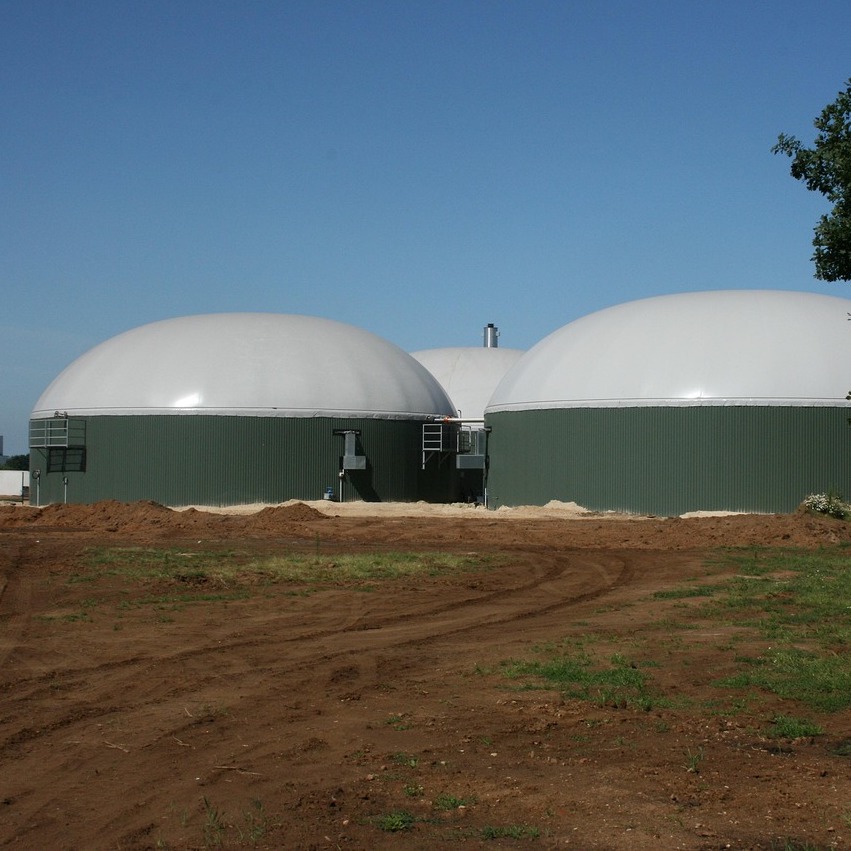
The Longship (Langskip) programme in Norway is the first initiative to cover the entire value chain for the capture, transport and storage of industrial CO₂ emissions. In June 2025, a plant for separating CO₂ from the process gases of cement production, followed by compression and storage, was commissioned at Heidelberg Materials’ cement plant in Brevik. Since it went into operation, the company has been able for the first time to offer climate‑neutral, i.e. CO₂‑emission‑free, cement. The annual amount of CO₂ captured at this site is reported to be around 400,000 tonnes.
The CO₂ captured in Brevik is transported by ship to the Øygarden terminal. There it is temporarily stored in tanks before being transported via a pipeline to the injection well and from there into a reservoir beneath the seabed. The service company Northern Lights is responsible for transport and storage of the CO₂.

The CCS plant at Heidelberg Materials’ Brevik site in Norway. Source: https://www.brevikccs.com/en
As part of Longship, a second industrial company is to supply CO₂ for storage off Øygarden, in the order of 350,000 tons per year. However, construction work on CO₂ capture at the site of the energy company Hafslund in Oslo was initially halted in 2023 for cost reasons. Following a comprehensive cost-cutting phase and renegotiation of government subsidies, the project has now been resumed.
Denmark
The Greensand project in Denmark is the first major CCS project in an EU country. It is operated by the energy company Ineos. In the first commercial expansion stage (“Greensand Future”), CO₂ is captured at Danish biogas and biomethane production facilities. The liquefied greenhouse gas is transported to the Esbjerg terminal, stored there, and then shipped by specially built tankers to the Siri/Nini fields, where it is injected into an underground reservoir. In May 2025, the first of these ships, “Carbon Destroyer 1”, was christened and launched (see image).

Carbon Destroyer I is the first tanker to transport liquefied CO₂ to the injection site for gas storage under the seabed.
According to Ineos, Greensand Future initially aims to safely capture and permanently store around 400,000 tonnes of CO₂ per year. By 2030, storage capacity is to be gradually expanded as CO₂ volumes increase, with a potential of up to 8,000,000 tonnes of CO₂ per year. Greensand is intended to process not only CO₂ from Danish industrial sources, but in future also gas volumes from Swedish sources.
United Kingdom
The United Kingdom has set itself the ambitious goal of capturing 20 to 30 million tonnes of CO₂ per year by 2030, supported by up to 22 billion GBP in government funding. Four major CCUS clusters are planned:
- HyNet: This project is built on two pillars: CO₂ capture and hydrogen production, including the infrastructure for transporting and storing both gases. Hydrogen is produced using natural gas or methane. In parallel, CO₂ capture from heavy industry in north‑west England and Wales is to be expanded. This gas is to be transported through underground pipelines to gas caverns in Liverpool Bay. More than 25 years of natural gas extraction have created empty spaces there, which are now to be filled with CO₂. The system is expected to be operational around 2030, with a planned CO₂ storage capacity of 4.5 million tonnes per year.
- In the East Coast Cluster (ECC), two neighbouring industrial regions in north‑west England have joined forces to provide a CO₂ storage capacity under the North Sea of 23 million tonnes per year by 2035, starting as early as 2027. The cluster region, also known as Britain’s “historic engine room”, is named after the estuaries of the Humber and Teesside rivers. It is home to major heavy industry sites (including petrochemicals, energy companies and energy‑intensive manufacturing plants) and two large ports (Hull and Middlesbrough). Large wind farms are located offshore. The first projects in this cluster were to be NZT Power, H2Teesside and Teesside Hydrogen CO₂ Capture. However, in December 2025 it was announced that BP had cancelled the H2Teesside project because it could not reach an agreement with the owner of the land intended for the plant. H2Teesside was planned as a large‑scale blue hydrogen and CO₂‑capture plant. I will continue to follow how ECC develops.
- Viking CCS: This project is also located in the Humber region, where CO₂ from various local industrial sources is to be collected and transported via a pipeline to a reservoir in the Viking field in the UK sector of the North Sea.
- The Acorn project is the largest initiative to reduce industrial CO₂ emissions on Scottish territory. By re‑using energy infrastructure from the oil and gas industry, captured industrial CO₂ emissions are to be stored safely and permanently in rock formations deep beneath the North Sea. Acorn would use one of the UK’s most mature and best‑researched geological CO₂ storage sites, located more than 100 km off the north‑east coast of Aberdeenshire and 2.5 km below the seabed of the North Sea.
Netherlands
The Dutch projects Porthos and Aramis focus on capturing and storing CO₂ from cement plants, refineries, the chemical industry and waste incineration plants.
As early as this year, around 2.5 million tonnes of CO₂ per year from industrial sources in the Port of Rotterdam are to be transferred via an offshore pipeline into depleted gas fields 20 km off the North Sea coast as part of the Porthos project. One source of CO₂ is the Shell refinery in the Port of Rotterdam. In November 2025, the refinery and the company Linde, which operates the CO₂ compressors, established an e‑hub to ensure power supply for gas compression and future transport.
The ARAMIS project is not as far advanced. At its core is a planned CO₂ collection hub in Maasvlakte, an industrial and port area in Rotterdam. The gas captured and compressed by industrial companies either arrives there via onshore pipelines, where it is compressed and, if necessary, temporarily stored, or it is brought to the hub by ship via the CO₂next terminal. onward transport to the injection sites also takes place via offshore pipelines. As things stand, a final investment decision is expected this year (2026) or next year, with commissioning planned for 2030. The final transport and storage infrastructure is then expected to have a capacity of 22 million tonnes of CO₂ per year.
Planned projects in Germany
In Germany, three large‑scale projects for the cement and lime industry are being planned with funding from the EU Innovation Fund:
Within the GeZero project, Heidelberg Materials intends to build the first German inland cement plant in which CO₂ is captured and stored. The cement kiln, which is being constructed at the Geseke site in North Rhine‑Westphalia, will be operated using the oxyfuel process. This means that the fuel is burned with pure oxygen instead of air to generate the reaction temperature of over 1,400 °C. The plant is scheduled to go into operation at the beginning of 2029. Around 700,000 tonnes of CO₂ per year are then to be captured and transported for storage under the North Sea.
The oxyfuel process also forms the basis for decarbonising cement production at Holcim’s plant in Lägerdorf, Schleswig‑Holstein. Here, the planned capture capacity is 1.2 million tonnes of CO₂ per year. According to the project flyer, the aim is to use the captured greenhouse gas in industrial applications, for example in the beverage industry. The high purity of the captured gas is expected to make this possible. In addition to complete capture and storage of the unavoidable CO₂ emissions from cement production, more than one million tonnes of CO₂ per year are to be saved.
In Wülfrath in North Rhine‑Westphalia, the company Lhoist, a manufacturer of lime products, intends to decarbonise its largest production facility in Europe. For this purpose, the Everest project was launched. The measures include construction of a new kiln, also using oxyfuel technology, and a CO₂ capture plant. The project partner for capture is Air Liquide, which will deploy its proprietary Cryocap™ FG (flue gas) and Cryocap™ Oxy capture technologies at this site. These systems run entirely on electrical energy and thus make a further contribution to decarbonising the overall system. In total, 1.4 million tonnes of CO₂ per year are to be captured from the process gases of the existing kilns and the new kiln. The project also includes infrastructure for liquefying and storing the captured greenhouse gas.