

MountAInWater: Understanding water in the highest mountains of the world,
…predicting changes of water availability and investigate social an ecological impacts of these changes — this is at which researchers from six countries are going to work together.
The mega project MountAInWater is led by Prof. Francesca Pellicotti from the Institute of Science and Technology Austria (ISTA) and granted by the foundation Schmidt Sciences with in total 9.5 million €. Schmidt Science foundation, which was founded by Eric Schmidt, former CEO of Google, and philantropist Wendy Schmidt, supports transformative environmental projects.
The first global real-world analysis
The project aims to conduct, for the first time, a comprehensive real-world analysis of water resources in four different mountain regions using high-resolution models, in order to assess the impacts of climate change on these water resources and identify potential tipping points in these regions.
The project is based on four pillars: fieldwork in four high-mountain regions, simulation using physical models and AI, and finally the investigation of local social and ecological changes. Effective and sustainable water management strategies will then be developed there in collaboration with local stakeholders.
The super sites: water towers for their continents
For their field research, the scientists selected the four highest mountain ranges on Earth. Each of these plays a significant role in supplying huge amounts of water, which is essential for the survival of the regions at their feet. Some characteristics of these sites are listed below.
Himalayas
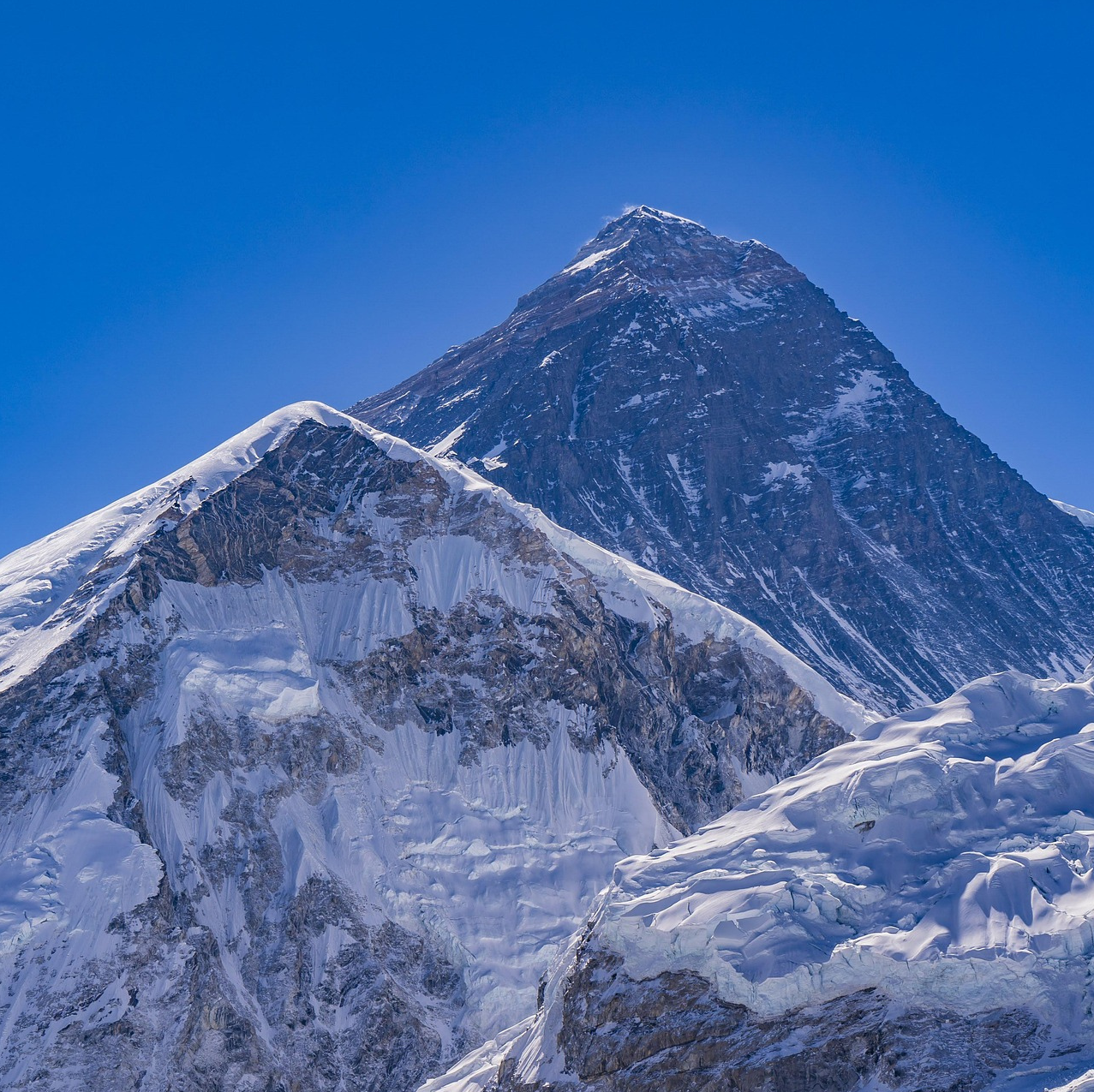
The Himalayas are the largest ice mass on Earth after the polar ice caps and feed at least 10–12 major river systems, including the Indus, Ganges, Brahmaputra, Mekong, Salween, Yangtze, Yellow River and Amu Darya [1]. These rivers provide water for around 1.5–1.9 billion people, supplying drinking water, irrigation water for agriculture and process water for industry and commerce. Furthermore, with a total hydropower potential of more than 500 GW, they make a significant contribution to the energy supply in their catchment areas [2]. During dry seasons, glacial and permafrost meltwater maintain the flow in these watercourses.
The Pamir Mountains
The Pamir Mountains are the critical water reservoir for Central Asia: the meltwater from their snow and glaciers primarily feeds the Amu Darya River, which is the main source of fresh water for Turkmenistan and is equally vital for agricultural irrigation and hydropower generation in Uzbekistan and Tajikistan [3].
Rocky Mountains
Meltwater from the Rockies feeds numerous rivers that supply water to the western Canadian metropolitan areas of Vancouver and Calgary, as well as other cities in Alberta and the Canadian Prairie provinces. Furthermore, water from the Rockies flows into the northern interior and the Arctic.
In the USA, too, vast areas of agricultural land in the Columbia River system and in the catchment areas of the Columbia River’s tributaries are irrigated with water from the Rockies.
The Andes
The Andes are the water tower of the South American continent; without them, large parts of the water-dependent ecosystems and economic regions would not exist in their present form. This applies equally to the Amazon region, the subtropical agricultural regions such as the La Plata Basin – which encompasses parts of Argentina, Paraguay, Uruguay and southern Brazil – and the arid coastal regions of Chile and Peru.
From the super sites to the whole world — by means of AI
The data collected on-site at the super sites is used to further develop physical models. These models enable the scientists to simulate tipping points in the cryosphere – i.e. in glaciers, snow and permafrost – as well as water flows from mountain systems.
Artificial intelligence will be used to extend the study to a global scale. This is because the simulations based on physical models for the respective super sites are intended to serve as training data for machine learning models.
“With AI on board, we’re able to speed up the computational demands of advanced physics-based models and generate a real analysis of mountain water resources worldwide,” says Adrià Fontrodona-Bach, scientific coordinator of MountAInWater and a postdoc in the Pellicciotti research group at ISTA.
The models simulate the response of the cryosphere to climate and water fluxes across all major mountain ranges with spatial resolution as fine as one kilometer.
“Doing this on a global scale has not been possible before. Even with the best state-of-the-art numerical models, one had to decide between staying on a regional level or—when going global—using simpler models,” Fontrodona-Bach adds.
This limitation will now be overcome by switching from purely numerical ‘classical’ models to a combination with AI-driven ones.
Detect regional hotspots and come to action
After finishing the global real-world analysis, the researchers will return to the regional hotspots.
“These hotspots are where the data indicates significant changes or vulnerabilities in water availability—places already facing, or likely to face, water scarcity,” Pellicciotti notes.
To develop sustainable water management strategies at a local level, the researchers will collaborate with local stakeholders and utilise a ‘Mountain Digital Twin’. This interactive platform will help communities visualise the impacts of climate change and discuss adaptation options together.
Project partners from six countries
In addition to three research teams from ISTA, which contribute to the project, the following partners are involved:
The universities of Utrecht and Saskatchewan are focussing on understanding ecological impacts downstream of mountain water sources. ETH Zurich will deliver remote sensing and field data to support the modelling within the project. The Technical University of Munich and the University of Lausanne, will develop and apply AI models for the global real analysis. Furthermore, Future Water and Wageningen University will focus on identifying water scarcity hotspots and simulation water resources allocation, whils Climate Adaption Services will be co-designing community-based adaption and mitigation strategies.
Further Sources:
[1] A. Chandra: The Himalayas laid bare: How vanishing snow and ice are reshaping Asia’s water tower. DownToEarth, 15. Jan. 2026. [2] Himalayan Geographic Research Foundation (HGRF): The Himalayan Rivers: Lifelines of South Asia. April 2025, available under this link. [3] R. Kumar: Glacier Retreat and Water Security: What Are Long-Term Implications of Glacier Melt in the Tien Shan und Pamir Mountains for Dowstream Water Availability in Uzbekistan and Turkmenistan? Int. J. of Research and Scientific Innovation (IJRSI), Vol. XII Issue IX September 2025. DOI: 10.51244/IJSRSI.Featured image: Himalayas, Mount Everest. Source: DominickVietor / Pixabay