

Recyclable ink containing lignin for 3D printing
Researchers at the Helmholtz Centre Hereon have developed a water-based ink for 3D printing that does not require polymers from fossil raw materials. Instead, it contains an industrial waste product that is available in large quantities: lignin.
The recyclable ink developed at the Hereon Institute for Functional Materials for Sustainability is intended for use in direct ink writing (DIW) at room temperature. This process belongs to the material jetting processes.
| 3D printing processes using inks |
| The ink described in this article is used in material jetting prozesses. This principle is similar to 2D inkjet printing: a printing head dispenses droplets of liquid material directly on a base plane. There the material cures, either as effect of UV light, by cooling down or without additional measures at room temperature. One type of inks consist of UV-curing polymer resins as main components, plus photo initiators, probably thinning agents, pigments or colors and further additives to help achieving the demanded product properties. Alternatively inks are used that contain inorganic nanoparticles from metal or ceramic, which are dispersed in a carrier liquid. With these inks, the liquid evaporates after printing at a temperature of about 300 °C. The further solidification of the remaining material is achieved by a sintering process. |
| Information on different types of 3D printers, how they work, the materials used, and areas of application can be found on platforms such as www.eufymake.com or the online magazine 3Druck.com. |
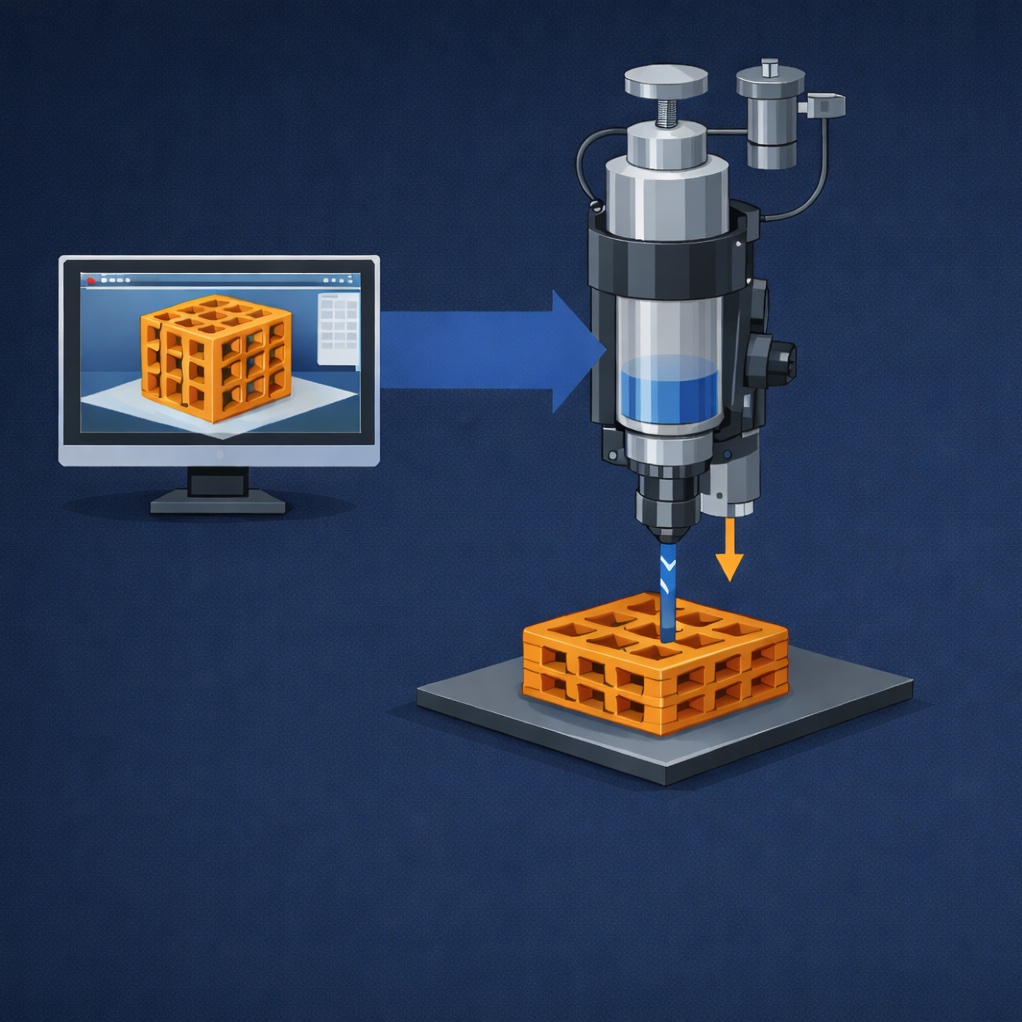
This image was created using AI to illustrate the principle of 3D printing with ink. It has no connection whatsoever to the Helmholtz Centre Hereon, the original publication of the development described here, or any of the other websites mentioned in this article.
Ink recycling by adding water
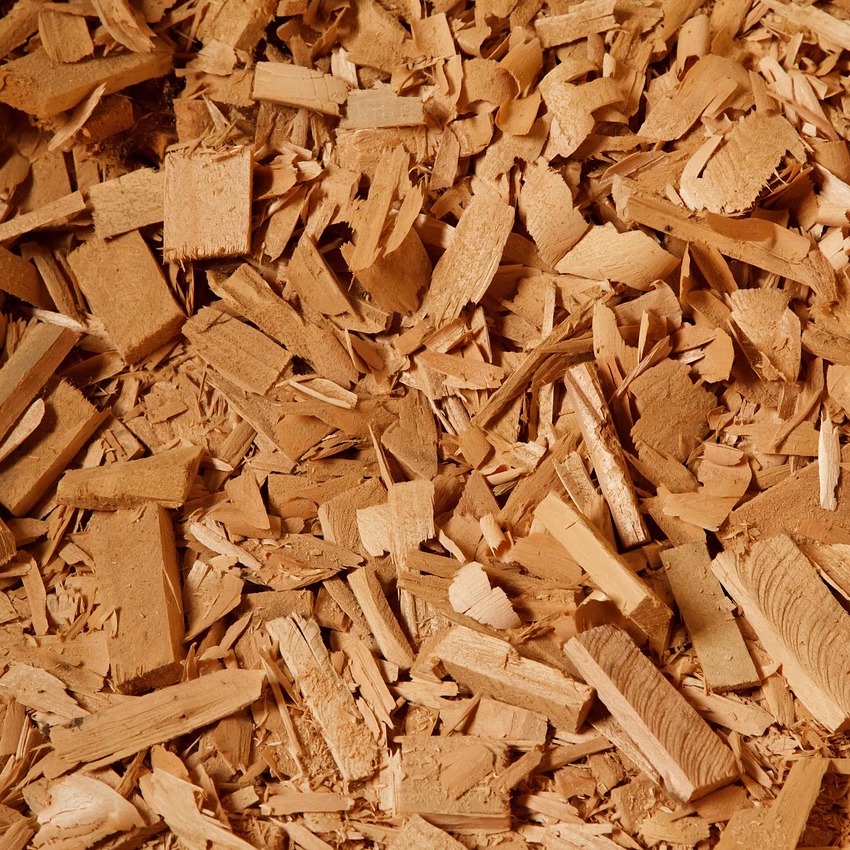
Most printer inks are based on fossil polymers, which are often neither recyclable nor biodegradable. Inks made from lignin could be a sustainable solution. However, the use of lignin has so far usually required high temperatures or irreversible chemical processes. The ink used in this study consists of approximately 70% lignin, which is produced during paper manufacturing or extracted directly from biomass. This ink flows easily through the nozzles during the printing process and then solidifies when at rest. No chemical or thermal post-treatment is required for curing.
The team at the Hereon Institute for Functional Materials for Sustainability is unwilling to compromise:
“We wanted to demonstrate that waste-derived materials like lignin can meet the technical demands of modern 3D printing while improving sustainability,” explains Dr Maria Balk, one of the lead authors of the paper. “To do this, we transformed an industrial waste product into a water-based 3D printing ink that can be fully recycled simply by adding water.”
The researchers found that the printed objects could be recycled several times without loosing their performance.
“This is still very rare in additive manufacturing and could offer a realistic pathway toward circular manufacturing in 3D printing, where materials can be reused instead of discarded, significantly reducing waste and CO2 emissions.”
The team plans to further optimize and test the recyclable ink to enable the market launch. This includes further scaling the process and searching for suitable fields of application.
Featured image: Public Domain Pictures / Pixabay